Are you watching the Academy Awards this Sunday? If so, here’s some great trivia and such to get you pumped for the big event. As you already know, “The King’s Speech” is my favorite film of the year, so I’m rooting for it all the way. But here are some of my other favorites I will be cheering on as well.
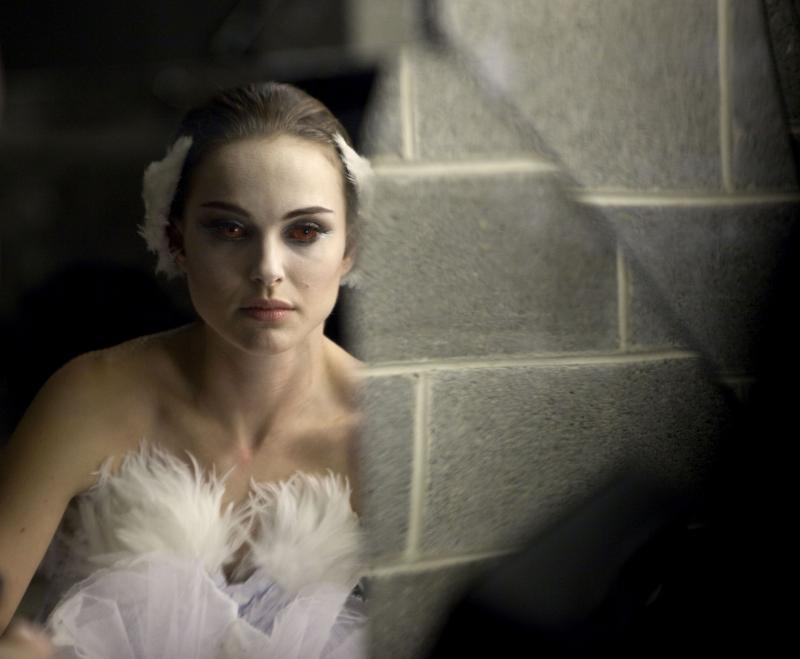
First up, “Black Swan.” I loved Natalie Portman’s performance in this film and truly believe she is the rightful winner of the Best Actress award this year. Also Darren Aronofsky actually managed to turn a film about ballet into a smash hit. Amazing! Portman’s turn as a perfectionist ballerina given her first lead role in “Swan Lake,” only to become paranoid about a new dancer in the company stealing it from her, is really the child-to-adult actress’s best film to date. She lost 20 pounds to play the part (something she is glad to be the complete opposite of now with her pregnancy).
Portman did have some ballet experience before this film, taking lessons from the ages of 4 to 13. But in preparation for “Black Swan,” she started training extensively for a whole year before production began, which not only involved ballet exercises but also swimming a mile a day. Aronofsky even admitted that for seven months of that year, Portman paid for the training out of her own pocket while the production was still trying to raise money for the film. When they did have enough money finally, it was so little that they couldn’t afford a medic, something that disturbed Portman after she twisted a rib during a lift (that took six weeks to heal). She offered up her own trailer in exchange for a medic from then on.
Another favorite performance I hope wins is Hailee Steinfeld. The 14-year-old star of “True Grit” really deserved a Best Actress nomination, but unfortunately, in Hollywood politics, the film’s marketing decided to submit her for Best Supporting Actress, as they knew she couldn’t beat out Portman. But Steinfeld truly is the leading star of “Grit.” Playing Mattie Ross, the young girl out for revenge on her father’s murderer, she holds her own with costars Jeff Bridges (who should be in the Best Supporting Actor category) and Matt Damon in her debut film.
Steinfeld won the role over 15,000 other young girls from ages 12-16. The Coen brothers wanted to make sure they kept that “simple, tough as nails young woman [whose] unusually steely nerves and straightforward manner are often surprising” characteristic that drew the brothers to the book in the first place. So first they looked all over Texas, and then expanded their search, finding Steinfeld here in LA.
My final big cheer fest for this year will be for “Toy Story 3.” Even though it would be awesome for it to win the Best Picture Oscar, it will definitely win for Best Animated Feature at least. And thank goodness, because I feel it is the pinnacle of Pixar’s talent. My favorite films of Pixar are still “Finding Nemo” and “Wall-e” but “Toy Story 3” is close on their heels. It’s the heart of the story, like the other two, that get me the most. Little Andy has grown up and now both he and his toys must move on. But will they be loved again or just thrown away? It’s a story that made even my dad sniffle and tear up at the end.
The film, which took two and a half years to write and storyboard, actually was more work for the studio than you might think. Because of all the advances in technology over the ten years since “Toy Story 2,” the animators couldn’t use the original base models for all the characters. So instead they had to recreate them all from scratch. Disney had been working on a third installment to “Toy Story” many years before Pixar though. During the two groups falling out from 2004-2005, Disney developed its own sequel without the Pixar crew. In this version, Buzz had a defect and was shipped to Taiwan for repair. But when the toys learn that the company is just tossing the old Buzzes and replacing them with new ones, they all ship themselves overseas to save Buzz. Luckily, when Pixar and Disney made up, they scrapped all ideas from that brief time and started over from scratch.
So, I hope this has revved you up for the big day on Sunday. Will all your favorites win? Will mine? Or will Hollywood just implode upon itself? (Hey, you never know…you never know.) Whatever the outcome, I hope you all have a fun time watching. See you next week with more great Hollywood history. Later, gators!
(Post-tidbit: “Toy Story 3” director Lee Unkrich's kids got to help their dad out with the film. His son Max wrote Daisy's name on Big Baby's pendent, as well as Bonnie's name on her backpack, and the others drew all the pictures in Bonnie's room.)
Showing posts with label The Academy Awards. Show all posts
Friday, February 25, 2011
Tuesday, January 25, 2011
Hollywood 101: It's Oscar Time!
The nominations for the 83rd Annual Academy Awards were announced this morning. All in all, I'm pretty pleased with this year's list (especially since my favorite film of the year "The King's Speech" received the most nominations...but I am hugely obsessed with everything British so...what can I say). Therefore, what better time than now to start up my new post series entitled "Hollywood 101" with a little history lesson about the most coveted award in Hollywood? Ladies and gentleman, the Oscar!
The first Academy Awards ceremony was held...well, 82 years ago on May 16, 1929. It was a banquet in the Blossom Room of the Roosevelt Hotel on Hollywood Blvd. hosted by Academy president Douglas Fairbanks and director William C. deMille (Cecil B's older brother). 270 guests paid only $5 a ticket to attend the event and enjoy food such as Lobster Eugenie and Filet of Sole au Beurre, as well as dancing alongside Hollywood's royalty.
The Academy of Motion Picture Arts and Sciences (the group behind the awards) was the brainchild of MGM head honcho Louis B. Mayer two years earlier in an effort to stifle the growing unions' power in Hollywood by bringing together the biggest and most influential people in the industry. Obviously, his efforts failed on that point as SAG, the DGA and WGA, to name a few, are proof. His other goal with the formation of the Academy was to give some class to the industry. At that time in America, the moral aspects of the still-new movie industry had started coming under fire by people like mothers and clergy. Mayer believed that adding a little class with a stylish golden award would be just the public relations he needed...and he couldn't have been more correct.
The first awards ceremony wasn't even broadcast, but the Academy saw its public intrigue right at the start. The next ceremony would start the long history of broadcasting the awards to the world, starting with just a small Los Angeles radio station doing the broadcast. Also, the winners of the first awards were told of their wins a full three months before the ceremony. By the next year, the academy's board of governors had decided on announcing the winners at the ceremony itself. They did, however, release the list of winners to the newspapers so that they could publish the list at 11pm that night. That deal fell through though in 1940 when The Los Angeles Times decided to publish the list in their evening edition, which came out before the ceremony even began. After that, the sealed envelope and auditing firm Price Waterhouse (now called PricewaterhouseCoopers) started protecting the results and keeping the anticipation going.
Now, the famous statuette, commonly called the Oscar, is actually officially titled the Academy Award of Merit. Its design was created by MGM's chief art director Cedric Gibbons. He created a knight plunging a sword into a reel of film (with five spokes for each original division of the Academy - actors, directors, producers, writers and technicians) and drew it in the classic Art Deco style of the time with Mexican director/actor Emilio Fernández as his model. They then hired sculptor George Stanley to carve the little man in plaster and created the first gold-plated bronze statues. The statuettes are now made of 24-carat gold-plated britannium. The only time the Oscars were not made of some kind of metal was for three years during WWII, when the metal shortage caused them to switch to painted plaster. After the war was over though, all plaster-statue recipients were allowed to trade it in for metal ones. The nickname of "Oscar" has many different stories of origin but the most commonly accepted one comes from Margaret Herrick, an Academy secretary who first saw the little statue in 1931 and commented that it reminded her of her Uncle Oscar.
The first picture to win Best Picture was the WWI drama "Wings." Yet, Best Actor winner Emil Jannings was actually the first awarded statue ever. He wasn't able to be there for the first ceremony (he had to return to Germany) so they presented him with the award early. Since that day, 2,701 statues have been handed out. Who will be the next to join that list? You can catch the winners on February 27th. I'll be rooting for Colin Firth all the way. Who will you be rooting for? Hope you have a great week! Be back Friday with more fun trivia.
(Post-tidbit: The awards ceremony missed its scheduled time only three times throughout history - first in 1938 when a flooded Los Angeles caused it to be postponed a week, then in 1968 by two days in respect for Martin Luther King's funeral, and finally for a day in 1981 after the attempted assassination of Ronald Reagan.)
The first Academy Awards ceremony was held...well, 82 years ago on May 16, 1929. It was a banquet in the Blossom Room of the Roosevelt Hotel on Hollywood Blvd. hosted by Academy president Douglas Fairbanks and director William C. deMille (Cecil B's older brother). 270 guests paid only $5 a ticket to attend the event and enjoy food such as Lobster Eugenie and Filet of Sole au Beurre, as well as dancing alongside Hollywood's royalty.
The Academy of Motion Picture Arts and Sciences (the group behind the awards) was the brainchild of MGM head honcho Louis B. Mayer two years earlier in an effort to stifle the growing unions' power in Hollywood by bringing together the biggest and most influential people in the industry. Obviously, his efforts failed on that point as SAG, the DGA and WGA, to name a few, are proof. His other goal with the formation of the Academy was to give some class to the industry. At that time in America, the moral aspects of the still-new movie industry had started coming under fire by people like mothers and clergy. Mayer believed that adding a little class with a stylish golden award would be just the public relations he needed...and he couldn't have been more correct.The first awards ceremony wasn't even broadcast, but the Academy saw its public intrigue right at the start. The next ceremony would start the long history of broadcasting the awards to the world, starting with just a small Los Angeles radio station doing the broadcast. Also, the winners of the first awards were told of their wins a full three months before the ceremony. By the next year, the academy's board of governors had decided on announcing the winners at the ceremony itself. They did, however, release the list of winners to the newspapers so that they could publish the list at 11pm that night. That deal fell through though in 1940 when The Los Angeles Times decided to publish the list in their evening edition, which came out before the ceremony even began. After that, the sealed envelope and auditing firm Price Waterhouse (now called PricewaterhouseCoopers) started protecting the results and keeping the anticipation going.
Now, the famous statuette, commonly called the Oscar, is actually officially titled the Academy Award of Merit. Its design was created by MGM's chief art director Cedric Gibbons. He created a knight plunging a sword into a reel of film (with five spokes for each original division of the Academy - actors, directors, producers, writers and technicians) and drew it in the classic Art Deco style of the time with Mexican director/actor Emilio Fernández as his model. They then hired sculptor George Stanley to carve the little man in plaster and created the first gold-plated bronze statues. The statuettes are now made of 24-carat gold-plated britannium. The only time the Oscars were not made of some kind of metal was for three years during WWII, when the metal shortage caused them to switch to painted plaster. After the war was over though, all plaster-statue recipients were allowed to trade it in for metal ones. The nickname of "Oscar" has many different stories of origin but the most commonly accepted one comes from Margaret Herrick, an Academy secretary who first saw the little statue in 1931 and commented that it reminded her of her Uncle Oscar.
The first picture to win Best Picture was the WWI drama "Wings." Yet, Best Actor winner Emil Jannings was actually the first awarded statue ever. He wasn't able to be there for the first ceremony (he had to return to Germany) so they presented him with the award early. Since that day, 2,701 statues have been handed out. Who will be the next to join that list? You can catch the winners on February 27th. I'll be rooting for Colin Firth all the way. Who will you be rooting for? Hope you have a great week! Be back Friday with more fun trivia.
(Post-tidbit: The awards ceremony missed its scheduled time only three times throughout history - first in 1938 when a flooded Los Angeles caused it to be postponed a week, then in 1968 by two days in respect for Martin Luther King's funeral, and finally for a day in 1981 after the attempted assassination of Ronald Reagan.)
Subscribe to:
Posts (Atom)