Are you watching the Academy Awards this Sunday? If so, here’s some great trivia and such to get you pumped for the big event. As you already know, “The King’s Speech” is my favorite film of the year, so I’m rooting for it all the way. But here are some of my other favorites I will be cheering on as well.
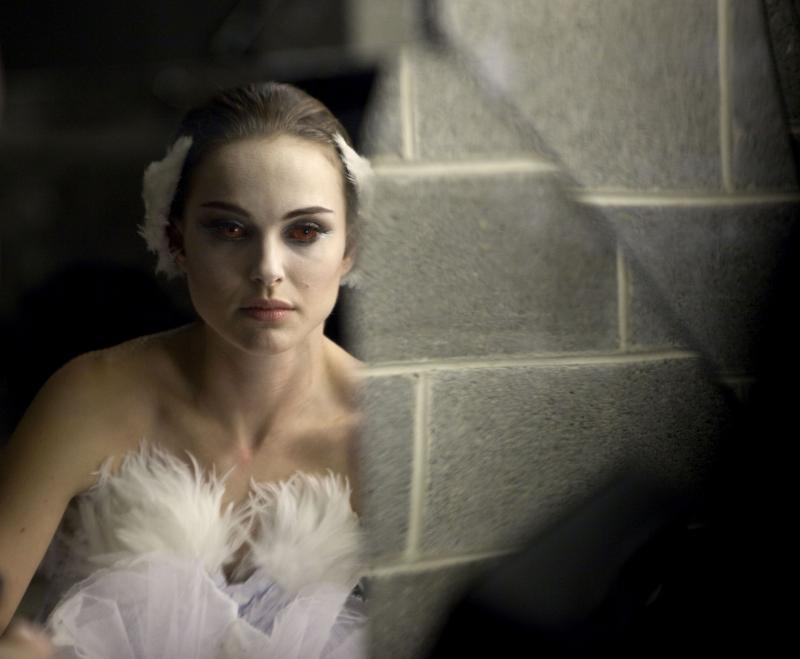
First up, “Black Swan.” I loved Natalie Portman’s performance in this film and truly believe she is the rightful winner of the Best Actress award this year. Also Darren Aronofsky actually managed to turn a film about ballet into a smash hit. Amazing! Portman’s turn as a perfectionist ballerina given her first lead role in “Swan Lake,” only to become paranoid about a new dancer in the company stealing it from her, is really the child-to-adult actress’s best film to date. She lost 20 pounds to play the part (something she is glad to be the complete opposite of now with her pregnancy).
Portman did have some ballet experience before this film, taking lessons from the ages of 4 to 13. But in preparation for “Black Swan,” she started training extensively for a whole year before production began, which not only involved ballet exercises but also swimming a mile a day. Aronofsky even admitted that for seven months of that year, Portman paid for the training out of her own pocket while the production was still trying to raise money for the film. When they did have enough money finally, it was so little that they couldn’t afford a medic, something that disturbed Portman after she twisted a rib during a lift (that took six weeks to heal). She offered up her own trailer in exchange for a medic from then on.
Another favorite performance I hope wins is Hailee Steinfeld. The 14-year-old star of “True Grit” really deserved a Best Actress nomination, but unfortunately, in Hollywood politics, the film’s marketing decided to submit her for Best Supporting Actress, as they knew she couldn’t beat out Portman. But Steinfeld truly is the leading star of “Grit.” Playing Mattie Ross, the young girl out for revenge on her father’s murderer, she holds her own with costars Jeff Bridges (who should be in the Best Supporting Actor category) and Matt Damon in her debut film.
Steinfeld won the role over 15,000 other young girls from ages 12-16. The Coen brothers wanted to make sure they kept that “simple, tough as nails young woman [whose] unusually steely nerves and straightforward manner are often surprising” characteristic that drew the brothers to the book in the first place. So first they looked all over Texas, and then expanded their search, finding Steinfeld here in LA.
My final big cheer fest for this year will be for “Toy Story 3.” Even though it would be awesome for it to win the Best Picture Oscar, it will definitely win for Best Animated Feature at least. And thank goodness, because I feel it is the pinnacle of Pixar’s talent. My favorite films of Pixar are still “Finding Nemo” and “Wall-e” but “Toy Story 3” is close on their heels. It’s the heart of the story, like the other two, that get me the most. Little Andy has grown up and now both he and his toys must move on. But will they be loved again or just thrown away? It’s a story that made even my dad sniffle and tear up at the end.
The film, which took two and a half years to write and storyboard, actually was more work for the studio than you might think. Because of all the advances in technology over the ten years since “Toy Story 2,” the animators couldn’t use the original base models for all the characters. So instead they had to recreate them all from scratch. Disney had been working on a third installment to “Toy Story” many years before Pixar though. During the two groups falling out from 2004-2005, Disney developed its own sequel without the Pixar crew. In this version, Buzz had a defect and was shipped to Taiwan for repair. But when the toys learn that the company is just tossing the old Buzzes and replacing them with new ones, they all ship themselves overseas to save Buzz. Luckily, when Pixar and Disney made up, they scrapped all ideas from that brief time and started over from scratch.
So, I hope this has revved you up for the big day on Sunday. Will all your favorites win? Will mine? Or will Hollywood just implode upon itself? (Hey, you never know…you never know.) Whatever the outcome, I hope you all have a fun time watching. See you next week with more great Hollywood history. Later, gators!
(Post-tidbit: “Toy Story 3” director Lee Unkrich's kids got to help their dad out with the film. His son Max wrote Daisy's name on Big Baby's pendent, as well as Bonnie's name on her backpack, and the others drew all the pictures in Bonnie's room.)
Friday, February 25, 2011
Tuesday, February 15, 2011
Hello, Mr. Burton: Becket & Anne of the Thousand Days
I have a lot of favorite actors (Paul Newman, Stewart Granger, Cary Grant, to name a few), and they all seem to have one common characteristic that drives them to me – their wonderful voices. I could listen to them talk all day long and never get tired of it. One very strong member of that amazingly-voiced-actors club is Richard Burton. So yummy...even if he was a drunk. So, today I thought I’d talk about two of my favorite films of his, the two films that brought him to my attention in the first place – “Becket” (1964) and “Anne of the Thousand Days” (1969).
Both of these films I first saw way back in grade school (way, way back). It’s actually funny how many classic films and actors I was introduced to, not through my own accord or a family or friend, but through the Texas public school system. And considering both these films may not be that historically accurate…yea to public education! But they are still so enjoyable to watch, even for my 10-year-old self, and shouldn’t be missed.
First up is “Becket” starring Burton and good friend Peter O’Toole (another great voice). It tells the story of the friendship, and then eventual betrayal, between King Henry II (O’Toole) and Thomas Becket (Burton). This film was actually how the two stars met, but they found a kindred spirit in each…or should I say spirits. They bonded mainly after work, drinking until dawn. The two did try to stay sober for the film, but it only lasted a week before finally they showed up to work plastered. They were filming the scene where Henry appoints Becket as England’s new Lord Chancellor. Luckily, there was little dialogue but O’Toole did have to put a ring on Burton’s finger, who described it as “like trying to thread a needle wearing boxing gloves.”
Burton was a little reluctant to accept the role of Becket at first, for he didn’t think it right to portray a Saint, or at least it wasn’t right that HE portrayed one. But luckily he changed his mind, and it resulted in one of the most intense and underplayed roles of his career. At the time, he had just married Elizabeth Taylor, and she was having a huge influence on him, both in his personal life and his career. He credits her with helping him truly transition between stage acting and screen acting, teaching him that on screen, less is more. She was also the one to get him to take the role of Becket, as well as play Hamlet again in 1964.
“Becket” is based on the play “Becket or the Honour of God” by Jean Anouilh. It appeared on Broadway with Laurence Olivier as Becket and Anthony Quinn as Henry II, and in London’s West End with Eric Porter and Christopher Plummer in the respective roles before it made the leap to the silver screen. O’Toole was originally cast to play Henry in the London production but had to break his contract to start rehearsals for “Lawrence of Arabia.” The film was also a critical darling, earning 10 Oscar nominations, including one for each of its two stars and Best Picture, but lost out to all but one – Best Adapted Screenplay.
“Anne of the Thousand Days” is also based on a play, this one by Maxwell Anderson from 1948. It tells the story of the romance between King Henry VIII and Anne Boleyn, his second wife. Burton had convinced Hal B. Wallis, the producer of “Becket” and many other period films, to purchase the rights to the play. While talking about it prior to filming, however, Elizabeth Taylor started to get excited as well. Finally, at lunch with the gentlemen, Taylor announced that she wanted to play Anne, she had to play Anne. At 37 years old though, she was too old to play the 18 year old heroine. Wallis didn’t know how to tell her this though, so Burton leaned over and said to her, “Sorry, luv. You're too long in the tooth."
Even though Burton did help Wallis with the idea for “Anne,” Burton was reluctant to do this film. He had been doing period pieces for some many years now that he was getting tired of putting on the costumes and such. As he said, “The unfortunate thing is that everyone wants me to play a prince or a king ... I'm always wearing a nightdress or a short skirt or something odd. I don't want to do them, I don't like them, I hate getting made up for them, I hate my hair being curled in the mornings, I hate tights, I hate boots, I hate everything. I'd like to be in a lounge suit, I'd like to be a sort of Welsh Rex Harrison and do nothing except lounge against a bar with a gin and tonic in my hand.”
He disliked his performance in “Anne” and was extremely surprised that it garnered him another Academy Award nomination (his sixth). His performance is beautiful, though, one not to miss. Extremely powerful, of which Hollywood took note…but not enough. He lost out on the Oscar again, to John Wayne for the original “True Grit.” He would only get one more Oscar nomination in his life, for “Equus” in 1977, only to lose out again, this time to Richard Dreyfuss in “The Goodbye Girl.” He would share the Academy record for most nominations by an actor without a win with his “Becket” costar and drinking buddy O’Toole until 2007 when O’Toole surpassed him with a loss for “Venus.”
Whatever his credits, his lifestyle, his persona, no one can deny he was an amazingly power performer. He was the first of the new Hollywood fame that revels in the spotlight more than the art itself. He even said about himself once, “I rather like my reputation, actually, that of a spoiled genius from the Welsh gutter, a drunk, a womanizer; it's rather an attractive image.” He had the talent though, cherished words like no other, and almost sang ever word with his beautiful deep voice. So watch and listen to an amazing actor this week. “Becket” is an instant streamer on Netflix and “Anne of the Thousand Days” can be found on DVD. Have a wonderful rest of your week, everyone, and I’ll be back next week with more fun trivia.
(Post-tidbit: During “Becket,” Burton and Taylor were madly in love, but by the time “Anne” arrived, Burton’s eyes had started to wander. So when rumor got back to Taylor that Burton and Genevieve Bujold, aka Anne, were possibly getting along a little too well on set, Taylor decided to pay a visit to the set. When Bujold heard of this, she was furious and stated aloud “I'm going to give that bitch an acting lesson she'll never forget!" She then proceeded to give the power final scene of the film between Anne and Henry.)
Both of these films I first saw way back in grade school (way, way back). It’s actually funny how many classic films and actors I was introduced to, not through my own accord or a family or friend, but through the Texas public school system. And considering both these films may not be that historically accurate…yea to public education! But they are still so enjoyable to watch, even for my 10-year-old self, and shouldn’t be missed.
First up is “Becket” starring Burton and good friend Peter O’Toole (another great voice). It tells the story of the friendship, and then eventual betrayal, between King Henry II (O’Toole) and Thomas Becket (Burton). This film was actually how the two stars met, but they found a kindred spirit in each…or should I say spirits. They bonded mainly after work, drinking until dawn. The two did try to stay sober for the film, but it only lasted a week before finally they showed up to work plastered. They were filming the scene where Henry appoints Becket as England’s new Lord Chancellor. Luckily, there was little dialogue but O’Toole did have to put a ring on Burton’s finger, who described it as “like trying to thread a needle wearing boxing gloves.”
Burton was a little reluctant to accept the role of Becket at first, for he didn’t think it right to portray a Saint, or at least it wasn’t right that HE portrayed one. But luckily he changed his mind, and it resulted in one of the most intense and underplayed roles of his career. At the time, he had just married Elizabeth Taylor, and she was having a huge influence on him, both in his personal life and his career. He credits her with helping him truly transition between stage acting and screen acting, teaching him that on screen, less is more. She was also the one to get him to take the role of Becket, as well as play Hamlet again in 1964.
“Becket” is based on the play “Becket or the Honour of God” by Jean Anouilh. It appeared on Broadway with Laurence Olivier as Becket and Anthony Quinn as Henry II, and in London’s West End with Eric Porter and Christopher Plummer in the respective roles before it made the leap to the silver screen. O’Toole was originally cast to play Henry in the London production but had to break his contract to start rehearsals for “Lawrence of Arabia.” The film was also a critical darling, earning 10 Oscar nominations, including one for each of its two stars and Best Picture, but lost out to all but one – Best Adapted Screenplay.
“Anne of the Thousand Days” is also based on a play, this one by Maxwell Anderson from 1948. It tells the story of the romance between King Henry VIII and Anne Boleyn, his second wife. Burton had convinced Hal B. Wallis, the producer of “Becket” and many other period films, to purchase the rights to the play. While talking about it prior to filming, however, Elizabeth Taylor started to get excited as well. Finally, at lunch with the gentlemen, Taylor announced that she wanted to play Anne, she had to play Anne. At 37 years old though, she was too old to play the 18 year old heroine. Wallis didn’t know how to tell her this though, so Burton leaned over and said to her, “Sorry, luv. You're too long in the tooth."
Even though Burton did help Wallis with the idea for “Anne,” Burton was reluctant to do this film. He had been doing period pieces for some many years now that he was getting tired of putting on the costumes and such. As he said, “The unfortunate thing is that everyone wants me to play a prince or a king ... I'm always wearing a nightdress or a short skirt or something odd. I don't want to do them, I don't like them, I hate getting made up for them, I hate my hair being curled in the mornings, I hate tights, I hate boots, I hate everything. I'd like to be in a lounge suit, I'd like to be a sort of Welsh Rex Harrison and do nothing except lounge against a bar with a gin and tonic in my hand.”
He disliked his performance in “Anne” and was extremely surprised that it garnered him another Academy Award nomination (his sixth). His performance is beautiful, though, one not to miss. Extremely powerful, of which Hollywood took note…but not enough. He lost out on the Oscar again, to John Wayne for the original “True Grit.” He would only get one more Oscar nomination in his life, for “Equus” in 1977, only to lose out again, this time to Richard Dreyfuss in “The Goodbye Girl.” He would share the Academy record for most nominations by an actor without a win with his “Becket” costar and drinking buddy O’Toole until 2007 when O’Toole surpassed him with a loss for “Venus.”
Whatever his credits, his lifestyle, his persona, no one can deny he was an amazingly power performer. He was the first of the new Hollywood fame that revels in the spotlight more than the art itself. He even said about himself once, “I rather like my reputation, actually, that of a spoiled genius from the Welsh gutter, a drunk, a womanizer; it's rather an attractive image.” He had the talent though, cherished words like no other, and almost sang ever word with his beautiful deep voice. So watch and listen to an amazing actor this week. “Becket” is an instant streamer on Netflix and “Anne of the Thousand Days” can be found on DVD. Have a wonderful rest of your week, everyone, and I’ll be back next week with more fun trivia.
(Post-tidbit: During “Becket,” Burton and Taylor were madly in love, but by the time “Anne” arrived, Burton’s eyes had started to wander. So when rumor got back to Taylor that Burton and Genevieve Bujold, aka Anne, were possibly getting along a little too well on set, Taylor decided to pay a visit to the set. When Bujold heard of this, she was furious and stated aloud “I'm going to give that bitch an acting lesson she'll never forget!" She then proceeded to give the power final scene of the film between Anne and Henry.)
Tuesday, February 8, 2011
Hollywood Composition: Two Guys Named John
Sadly last week, we lost one of Hollywood's great film composers, John Barry. He passed away at his home in New York from a heart attack at the age of 77. And today happens to be another great Hollywood composer's birthday. John Williams turns 79 today. So what better time than today to talk about my love of these two great gentlemen's music?
Now, I'm pretty sure all of you know the name John Williams. He is THE film composer, the king of all themes. He created the music for all the Star Wars and Indiana Jones films, the first three Harry Potter films, the first two Jurassic Park films, "Superman," "Jaws," "Close Encounters of the Third Kind," "E.T."...need I go on? There are just so many to name. He even wrote the theme for the Olympics, that fanfare we hear constantly every two years! He has been nominated 45 times for Academy Awards. 45!! Tied with composer Alfred Newman, he is the second most nominated individual in Oscar history. (Walt Disney is #1 with 59 nominations, 22 of those winners.) Williams has only won five out of his 45 nominations, but he's also won four Golden Globes, seven BAFTAs, and 21 Grammys. I got to see him conduct at the Hollywood Bowl once. My brother gave me tickets for my birthday one year. It was so amazing to hear many of his famous themes conducted by the man himself in those historic and iconic hills of Hollywood.
John Barry, on the other hand, you may not recognize the name as well, but I'm sure you know his music. His list includes Oscar-winners "Dances with Wolves," "Out of Africa," "Born Free," "The Lion in Winter," as well as "Somewhere in Time," "Chaplin," and eleven James Bond films. In fact, though he didn't receive screen credit for it, he created the famous Bond theme music...or at least arranged it. "Dr. No" composer Monty Norman was having such a difficult time creating a satisfying theme for Bond that the producers turned to then-lesser-known Barry for help. He came in and, using some of Norman's already-written elements, arranged the Bond theme we know so well today. Norman received all the credit and residuals for the piece but many people have made it no secret that Barry came in to help. Norman has won two class action lawsuits against others claiming that Barry was the actual composer. Most likely he did just arrange it better, adding some jazz riffs and motifs here and there. Yet, when producers had trouble with their next composer on "From Russia with Love," they remembered Barry and hired him full out as the film's composer, a relationship that lasted for ten more films. The other famous Bond theme titled "007" is all Barry's.
The two Johns are both so iconic that it difficult to rank them on my favorites list. John Williams is of course on a level all his own. And Barry's scores are so beautiful that they just don't fit with my actual list. (Yes, I have an actual favorite film composer list. Geeks, here I am.) My favorites of Williams' scores are, of course, all of the Star Wars music. It is like a true symphony, story through music and themes. My first ever trip to the Hollywood Bowl was to see the LA Philharmonic perform AFI's 25 Greatest Film Scores (a list only performed there that night). "Star Wars" was voted the #1 film score of all time, and rightly so. It was another beautiful night to hear them build to that last song performed. (Williams also received #6 and #14 on the list, for "Jaws" and "E.T." respectively.) As for Barry, he is my romantic composer. If you wanted to make a film that was a love letter to anything, Barry was your man. My favs are "Chaplin" (a letter to Chaplin and the original Hollywood era), "Dances with Wolves" (a letter to the Old West), and "Somewhere in Time" (a letter to...well, love itself).
These two men had very different starts, though jazz played a big part in both. Barry grew up in England, spending his childhood at the eight cinemas his father owned. Loving the action-adventure films the most because of the music, Barry learned to play the piano and trumpet in order to one day compose music himself. When he was 25, he formed his own jazz band called The John Barry Seven, which brought him to the attention of the BBC show "Drumbeat." On that, he met singer Adam Faith who hired Barry for his first film-composing job for Faith's first movie as well, "Beat Girl." This led to three more films and a job at EMI record company arranging orchestral music for the company's artists. These achievements are what caught the attention of the Bond producers and the rest is, as they say, Hollywood history.
Williams, though, grew up with music in his family. Born in Queens, New York, his love of music came from his father, a jazz drummer. He moved to North Hollywood with his family when he was 16 and attended UCLA for awhile after high school. He was drafted by the Air Force, however, when he was 20 and spent the next three years arranging and conducting music for the Air Force Band. After his service, he moved back to New York and attended the famous Juilliard School, working as a jazz pianist on the side, earning the name "Little Johnny Love." After Juilliard, he moved back to LA and worked as a studio pianist, getting to work with composer greats like Henry Mancini and Alfred Newman. That's actually him playing the opening riff to Mancini's famous "Peter Gunn Theme." His first film-composing job was for the B-movie "Daddy-O" in 1958, and his career just grew from there, with films and television alike. (Some of his TV themes include "Lost in Space" and the pilot episode of "Gilligan's Island.")
So, get your music fix and listen to some greats this week, to honor both a man on his birthday and a man at his death. May your lives all be beautifully scored this week, just like in the movies. :) See you Friday!
(Post-tidbit: Williams has scored every one of Steven Spielberg's directorial films since they started working together in 1974 with "The Sugarland Express"...except two - "The Color Purple" and "Twilight Zone: The Movie," in which Spielberg only directed a section of the film.)
Now, I'm pretty sure all of you know the name John Williams. He is THE film composer, the king of all themes. He created the music for all the Star Wars and Indiana Jones films, the first three Harry Potter films, the first two Jurassic Park films, "Superman," "Jaws," "Close Encounters of the Third Kind," "E.T."...need I go on? There are just so many to name. He even wrote the theme for the Olympics, that fanfare we hear constantly every two years! He has been nominated 45 times for Academy Awards. 45!! Tied with composer Alfred Newman, he is the second most nominated individual in Oscar history. (Walt Disney is #1 with 59 nominations, 22 of those winners.) Williams has only won five out of his 45 nominations, but he's also won four Golden Globes, seven BAFTAs, and 21 Grammys. I got to see him conduct at the Hollywood Bowl once. My brother gave me tickets for my birthday one year. It was so amazing to hear many of his famous themes conducted by the man himself in those historic and iconic hills of Hollywood.
John Barry, on the other hand, you may not recognize the name as well, but I'm sure you know his music. His list includes Oscar-winners "Dances with Wolves," "Out of Africa," "Born Free," "The Lion in Winter," as well as "Somewhere in Time," "Chaplin," and eleven James Bond films. In fact, though he didn't receive screen credit for it, he created the famous Bond theme music...or at least arranged it. "Dr. No" composer Monty Norman was having such a difficult time creating a satisfying theme for Bond that the producers turned to then-lesser-known Barry for help. He came in and, using some of Norman's already-written elements, arranged the Bond theme we know so well today. Norman received all the credit and residuals for the piece but many people have made it no secret that Barry came in to help. Norman has won two class action lawsuits against others claiming that Barry was the actual composer. Most likely he did just arrange it better, adding some jazz riffs and motifs here and there. Yet, when producers had trouble with their next composer on "From Russia with Love," they remembered Barry and hired him full out as the film's composer, a relationship that lasted for ten more films. The other famous Bond theme titled "007" is all Barry's.
The two Johns are both so iconic that it difficult to rank them on my favorites list. John Williams is of course on a level all his own. And Barry's scores are so beautiful that they just don't fit with my actual list. (Yes, I have an actual favorite film composer list. Geeks, here I am.) My favorites of Williams' scores are, of course, all of the Star Wars music. It is like a true symphony, story through music and themes. My first ever trip to the Hollywood Bowl was to see the LA Philharmonic perform AFI's 25 Greatest Film Scores (a list only performed there that night). "Star Wars" was voted the #1 film score of all time, and rightly so. It was another beautiful night to hear them build to that last song performed. (Williams also received #6 and #14 on the list, for "Jaws" and "E.T." respectively.) As for Barry, he is my romantic composer. If you wanted to make a film that was a love letter to anything, Barry was your man. My favs are "Chaplin" (a letter to Chaplin and the original Hollywood era), "Dances with Wolves" (a letter to the Old West), and "Somewhere in Time" (a letter to...well, love itself).
These two men had very different starts, though jazz played a big part in both. Barry grew up in England, spending his childhood at the eight cinemas his father owned. Loving the action-adventure films the most because of the music, Barry learned to play the piano and trumpet in order to one day compose music himself. When he was 25, he formed his own jazz band called The John Barry Seven, which brought him to the attention of the BBC show "Drumbeat." On that, he met singer Adam Faith who hired Barry for his first film-composing job for Faith's first movie as well, "Beat Girl." This led to three more films and a job at EMI record company arranging orchestral music for the company's artists. These achievements are what caught the attention of the Bond producers and the rest is, as they say, Hollywood history.
Williams, though, grew up with music in his family. Born in Queens, New York, his love of music came from his father, a jazz drummer. He moved to North Hollywood with his family when he was 16 and attended UCLA for awhile after high school. He was drafted by the Air Force, however, when he was 20 and spent the next three years arranging and conducting music for the Air Force Band. After his service, he moved back to New York and attended the famous Juilliard School, working as a jazz pianist on the side, earning the name "Little Johnny Love." After Juilliard, he moved back to LA and worked as a studio pianist, getting to work with composer greats like Henry Mancini and Alfred Newman. That's actually him playing the opening riff to Mancini's famous "Peter Gunn Theme." His first film-composing job was for the B-movie "Daddy-O" in 1958, and his career just grew from there, with films and television alike. (Some of his TV themes include "Lost in Space" and the pilot episode of "Gilligan's Island.")
So, get your music fix and listen to some greats this week, to honor both a man on his birthday and a man at his death. May your lives all be beautifully scored this week, just like in the movies. :) See you Friday!
(Post-tidbit: Williams has scored every one of Steven Spielberg's directorial films since they started working together in 1974 with "The Sugarland Express"...except two - "The Color Purple" and "Twilight Zone: The Movie," in which Spielberg only directed a section of the film.)
Friday, January 28, 2011
Spaceballs: Laugh Your Schwartz Off
Well, last week I talked about the sci-fi movie of all sci-fi movies, "Star Wars" (1977). So how about flipping all that upside down with the essential sci-fi spoof "Spaceballs" (1987)?
"Spaceballs," Mel Brooks' destruction of the space genre, isn't his best (hello, "Young Frankenstein" (1974) and the original "The Producers" (1968)), but it's the film I always think of first whenever anyone mentions Brooks' name. This was the first Brooks film I ever saw, and as a kid, I thought it was hilarious. Spoofing what I love? Genius! And although I've grown out of some of the jokes as I've gotten older, it's still a hoot and a half to watch.
This science fiction parody starts out with the classic Star-Wars-ish scroll across the screening, explaining the villains of the movie, the Spaceballs, and their sinister plot to steal the air from planet Druidia. (You see, they destroyed their own planet's air through years of pollution. I wonder if that means one day we'll have to go suck another oxygen-loving planet's air dry...if we can find one.) On Druidia that day, however, Princess Vespa (Daphne Zuniga) is getting married...or is she? She runs away from the altar, only to be captured by the Spaceballs (who include Brooks himself and Rick Moranis as Dark Helmet). Luckily, our hero Lone Starr (Bill Pullman) is close by and saves the princess from capture. Together, they must evade the Spaceballs and get the princess back to Druidia safe and sound, while bickering and falling in love with each other along the way.
There are so many hilarious jokes in this film, it's hard to go through them all. My favorites are the Leia-like hair-bun earphones Princess Vespa is listening to (I have wanted a pair since I first saw them!) and John Hurt's cameo just so another creature can pop out of his stomach...and then go dancing across the counter. To this day, I can watch this sequence and laugh, yet the anticipation of seeing the more gory original version in "Alien" (1979) has caused me never to be able to watch the latter. Very odd, I know. Brooks said the two jokes he is most proud of from the film are Spaceballs: The Merchandise and the villains being able to rent the VHS of "Spaceballs" while they are still filming it.
No Spaceballs merchandise was ever released though because of a fair-use agreement between Brooks and George Lucas. (The coloring book and lunch box are actually "Transformers" items with the Spaceballs logo slapped on it.) Yes, you read that correctly. Lucas did know about "Spaceballs" before it even began pre-production. After finishing the script, Brooks sent it to Lucas for permission. He was nervous that he might be offended, but Lucas had no problems, for he was a fan of "Blazing Saddles" and "Young Frankenstein".
Brooks put together a hefty effects and makeup team for this one. The visual effects were actually run by John Dykstra, an ex-ILM employee. His company Apogee Inc. did most of the effects but ILM did actually help out a little. They created Hurt's stomach creature. As for John Candy's costume, it doesn't seem that elaborate at a glance but it required three people to control. Candy controlled his own tail with a little joystick in the palm of his hand while two other assistants controlled his ears, one per ear. It also had to be powered by a large battery (probably would be the size of a pen today) that Candy had to wear on his back. And Brooks himself wasn't without his own effects pain. The golden makeup he wore for the role of Yogurt caused a rash to break out on his neck. Also the constant walking around on his knees really caused pains, even with kneepads.
So, I recommend getting your laugh on this weekend with "Spaceballs." It's a blast to watch, especially if you've just watched "Star Wars." Have a wonderful weekend, everyone!
(Post-tidbit: Thanks to knowing this movie probably too well, I managed to sweep the first round when I was on "Trivial Pursuit" the game show one time...Of course I lost the second round, but that's beside the point. It's the only time I will ever thank Joan Rivers (aka Dot Matrix).)
"Spaceballs," Mel Brooks' destruction of the space genre, isn't his best (hello, "Young Frankenstein" (1974) and the original "The Producers" (1968)), but it's the film I always think of first whenever anyone mentions Brooks' name. This was the first Brooks film I ever saw, and as a kid, I thought it was hilarious. Spoofing what I love? Genius! And although I've grown out of some of the jokes as I've gotten older, it's still a hoot and a half to watch.
This science fiction parody starts out with the classic Star-Wars-ish scroll across the screening, explaining the villains of the movie, the Spaceballs, and their sinister plot to steal the air from planet Druidia. (You see, they destroyed their own planet's air through years of pollution. I wonder if that means one day we'll have to go suck another oxygen-loving planet's air dry...if we can find one.) On Druidia that day, however, Princess Vespa (Daphne Zuniga) is getting married...or is she? She runs away from the altar, only to be captured by the Spaceballs (who include Brooks himself and Rick Moranis as Dark Helmet). Luckily, our hero Lone Starr (Bill Pullman) is close by and saves the princess from capture. Together, they must evade the Spaceballs and get the princess back to Druidia safe and sound, while bickering and falling in love with each other along the way.
There are so many hilarious jokes in this film, it's hard to go through them all. My favorites are the Leia-like hair-bun earphones Princess Vespa is listening to (I have wanted a pair since I first saw them!) and John Hurt's cameo just so another creature can pop out of his stomach...and then go dancing across the counter. To this day, I can watch this sequence and laugh, yet the anticipation of seeing the more gory original version in "Alien" (1979) has caused me never to be able to watch the latter. Very odd, I know. Brooks said the two jokes he is most proud of from the film are Spaceballs: The Merchandise and the villains being able to rent the VHS of "Spaceballs" while they are still filming it.
No Spaceballs merchandise was ever released though because of a fair-use agreement between Brooks and George Lucas. (The coloring book and lunch box are actually "Transformers" items with the Spaceballs logo slapped on it.) Yes, you read that correctly. Lucas did know about "Spaceballs" before it even began pre-production. After finishing the script, Brooks sent it to Lucas for permission. He was nervous that he might be offended, but Lucas had no problems, for he was a fan of "Blazing Saddles" and "Young Frankenstein". Brooks put together a hefty effects and makeup team for this one. The visual effects were actually run by John Dykstra, an ex-ILM employee. His company Apogee Inc. did most of the effects but ILM did actually help out a little. They created Hurt's stomach creature. As for John Candy's costume, it doesn't seem that elaborate at a glance but it required three people to control. Candy controlled his own tail with a little joystick in the palm of his hand while two other assistants controlled his ears, one per ear. It also had to be powered by a large battery (probably would be the size of a pen today) that Candy had to wear on his back. And Brooks himself wasn't without his own effects pain. The golden makeup he wore for the role of Yogurt caused a rash to break out on his neck. Also the constant walking around on his knees really caused pains, even with kneepads.
So, I recommend getting your laugh on this weekend with "Spaceballs." It's a blast to watch, especially if you've just watched "Star Wars." Have a wonderful weekend, everyone!
(Post-tidbit: Thanks to knowing this movie probably too well, I managed to sweep the first round when I was on "Trivial Pursuit" the game show one time...Of course I lost the second round, but that's beside the point. It's the only time I will ever thank Joan Rivers (aka Dot Matrix).)
Tuesday, January 25, 2011
Hollywood 101: It's Oscar Time!
The nominations for the 83rd Annual Academy Awards were announced this morning. All in all, I'm pretty pleased with this year's list (especially since my favorite film of the year "The King's Speech" received the most nominations...but I am hugely obsessed with everything British so...what can I say). Therefore, what better time than now to start up my new post series entitled "Hollywood 101" with a little history lesson about the most coveted award in Hollywood? Ladies and gentleman, the Oscar!
The first Academy Awards ceremony was held...well, 82 years ago on May 16, 1929. It was a banquet in the Blossom Room of the Roosevelt Hotel on Hollywood Blvd. hosted by Academy president Douglas Fairbanks and director William C. deMille (Cecil B's older brother). 270 guests paid only $5 a ticket to attend the event and enjoy food such as Lobster Eugenie and Filet of Sole au Beurre, as well as dancing alongside Hollywood's royalty.
The Academy of Motion Picture Arts and Sciences (the group behind the awards) was the brainchild of MGM head honcho Louis B. Mayer two years earlier in an effort to stifle the growing unions' power in Hollywood by bringing together the biggest and most influential people in the industry. Obviously, his efforts failed on that point as SAG, the DGA and WGA, to name a few, are proof. His other goal with the formation of the Academy was to give some class to the industry. At that time in America, the moral aspects of the still-new movie industry had started coming under fire by people like mothers and clergy. Mayer believed that adding a little class with a stylish golden award would be just the public relations he needed...and he couldn't have been more correct.
The first awards ceremony wasn't even broadcast, but the Academy saw its public intrigue right at the start. The next ceremony would start the long history of broadcasting the awards to the world, starting with just a small Los Angeles radio station doing the broadcast. Also, the winners of the first awards were told of their wins a full three months before the ceremony. By the next year, the academy's board of governors had decided on announcing the winners at the ceremony itself. They did, however, release the list of winners to the newspapers so that they could publish the list at 11pm that night. That deal fell through though in 1940 when The Los Angeles Times decided to publish the list in their evening edition, which came out before the ceremony even began. After that, the sealed envelope and auditing firm Price Waterhouse (now called PricewaterhouseCoopers) started protecting the results and keeping the anticipation going.
Now, the famous statuette, commonly called the Oscar, is actually officially titled the Academy Award of Merit. Its design was created by MGM's chief art director Cedric Gibbons. He created a knight plunging a sword into a reel of film (with five spokes for each original division of the Academy - actors, directors, producers, writers and technicians) and drew it in the classic Art Deco style of the time with Mexican director/actor Emilio Fernández as his model. They then hired sculptor George Stanley to carve the little man in plaster and created the first gold-plated bronze statues. The statuettes are now made of 24-carat gold-plated britannium. The only time the Oscars were not made of some kind of metal was for three years during WWII, when the metal shortage caused them to switch to painted plaster. After the war was over though, all plaster-statue recipients were allowed to trade it in for metal ones. The nickname of "Oscar" has many different stories of origin but the most commonly accepted one comes from Margaret Herrick, an Academy secretary who first saw the little statue in 1931 and commented that it reminded her of her Uncle Oscar.
The first picture to win Best Picture was the WWI drama "Wings." Yet, Best Actor winner Emil Jannings was actually the first awarded statue ever. He wasn't able to be there for the first ceremony (he had to return to Germany) so they presented him with the award early. Since that day, 2,701 statues have been handed out. Who will be the next to join that list? You can catch the winners on February 27th. I'll be rooting for Colin Firth all the way. Who will you be rooting for? Hope you have a great week! Be back Friday with more fun trivia.
(Post-tidbit: The awards ceremony missed its scheduled time only three times throughout history - first in 1938 when a flooded Los Angeles caused it to be postponed a week, then in 1968 by two days in respect for Martin Luther King's funeral, and finally for a day in 1981 after the attempted assassination of Ronald Reagan.)
The first Academy Awards ceremony was held...well, 82 years ago on May 16, 1929. It was a banquet in the Blossom Room of the Roosevelt Hotel on Hollywood Blvd. hosted by Academy president Douglas Fairbanks and director William C. deMille (Cecil B's older brother). 270 guests paid only $5 a ticket to attend the event and enjoy food such as Lobster Eugenie and Filet of Sole au Beurre, as well as dancing alongside Hollywood's royalty.
The Academy of Motion Picture Arts and Sciences (the group behind the awards) was the brainchild of MGM head honcho Louis B. Mayer two years earlier in an effort to stifle the growing unions' power in Hollywood by bringing together the biggest and most influential people in the industry. Obviously, his efforts failed on that point as SAG, the DGA and WGA, to name a few, are proof. His other goal with the formation of the Academy was to give some class to the industry. At that time in America, the moral aspects of the still-new movie industry had started coming under fire by people like mothers and clergy. Mayer believed that adding a little class with a stylish golden award would be just the public relations he needed...and he couldn't have been more correct.The first awards ceremony wasn't even broadcast, but the Academy saw its public intrigue right at the start. The next ceremony would start the long history of broadcasting the awards to the world, starting with just a small Los Angeles radio station doing the broadcast. Also, the winners of the first awards were told of their wins a full three months before the ceremony. By the next year, the academy's board of governors had decided on announcing the winners at the ceremony itself. They did, however, release the list of winners to the newspapers so that they could publish the list at 11pm that night. That deal fell through though in 1940 when The Los Angeles Times decided to publish the list in their evening edition, which came out before the ceremony even began. After that, the sealed envelope and auditing firm Price Waterhouse (now called PricewaterhouseCoopers) started protecting the results and keeping the anticipation going.
Now, the famous statuette, commonly called the Oscar, is actually officially titled the Academy Award of Merit. Its design was created by MGM's chief art director Cedric Gibbons. He created a knight plunging a sword into a reel of film (with five spokes for each original division of the Academy - actors, directors, producers, writers and technicians) and drew it in the classic Art Deco style of the time with Mexican director/actor Emilio Fernández as his model. They then hired sculptor George Stanley to carve the little man in plaster and created the first gold-plated bronze statues. The statuettes are now made of 24-carat gold-plated britannium. The only time the Oscars were not made of some kind of metal was for three years during WWII, when the metal shortage caused them to switch to painted plaster. After the war was over though, all plaster-statue recipients were allowed to trade it in for metal ones. The nickname of "Oscar" has many different stories of origin but the most commonly accepted one comes from Margaret Herrick, an Academy secretary who first saw the little statue in 1931 and commented that it reminded her of her Uncle Oscar.
The first picture to win Best Picture was the WWI drama "Wings." Yet, Best Actor winner Emil Jannings was actually the first awarded statue ever. He wasn't able to be there for the first ceremony (he had to return to Germany) so they presented him with the award early. Since that day, 2,701 statues have been handed out. Who will be the next to join that list? You can catch the winners on February 27th. I'll be rooting for Colin Firth all the way. Who will you be rooting for? Hope you have a great week! Be back Friday with more fun trivia.
(Post-tidbit: The awards ceremony missed its scheduled time only three times throughout history - first in 1938 when a flooded Los Angeles caused it to be postponed a week, then in 1968 by two days in respect for Martin Luther King's funeral, and finally for a day in 1981 after the attempted assassination of Ronald Reagan.)
Subscribe to:
Posts (Atom)


