Friday, January 6, 2012

2011: The Best of the Best

Okay, it's hard to keep up a blog without at least self-made deadlines or goals.  (Paid deadlines would be even better, but, hey, can't have everything...yet.)  So I am officially back with a new goal to post one entry every week!  And this time it doesn't end on New Year's Day 2013.  This goal goes on until my computer breaks, my hands stop working, or I run out of movies.  So HAPPY NEW YEAR, everyone!  Welcome to 2012!

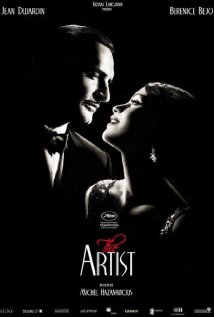
I thought I'd start out this year with the quintessential January post - the year in review.  2011 was a great year, I must say.  Personally, I moved in with my boyfriend and got engaged (yay me!), but even movie-wise, there were some amazing films.  However, my favorite of them all has to be "The Artist," hands down.  If you ever, EVER have a chance to see it, do!  I'm not a big silent movie fan, due to a couple of factors.  One - my love of movies started from watching big musicals like "The Sound of Music."  I love the huge numbers, and tend to sing along with them.  Hence, I like sound.  Two - I never really liked the over-the-top pantomiming of silent actors.  After seeing "The Artist," though, my perception of silent films completely changed.  Jean Dujardin, who plays the titular artist George Valentin (a wonderful mix between Errol Flynn and Gene Kelly), did an amazing job!  Not only was he able to do the silent era pantomime to a tee without over-hamming it, he also portrayed such believable, subtle, emotions during the dramatic parts.  He is definitely my favorite performance of the year.  If you love the history of film at all, "The Artist" is a must see.

Also in my tops for the year is "Hugo," a great choice for a double feature with "The Artist."  When I first heard Martin Scorsese was directing a children's movie, I was very curious.  What made Scorsese, of all people, want to direct this fanciful film about an orphaned boy living in a Paris train station.  Then I saw the film, and I understood completely.  It is a magical story that ultimately tells a tale about the beginning of film.  Both the young boy playing Hugo (Asa Butterfield, who is set to star in the upcoming "Ender's Game," which I'm stoked about!!) and Ben Kingsley, a lowly toy shop owner, give beautiful performances.  And Scorsese's art direction along with his use of 3D was breathtaking (and I'm usually not a 3D fan).  Unfortunately, "Hugo" suffers from some common flaws.  It is an adaptation of a novel, so some of the minor characters' importance in the book doesn't translate to the film.  And also, I don't think it was marketed properly.  The nature of the story changes course halfway through the film, so I believe Paramount didn't quite know how to promote it properly.  It is worth seeing, though.

My second favorite film of the year was "Rango," my definite choice for Best Animated Feature.  Going in to see "Rango," I was very, very skeptical.  It's trailers where just odd.  But while watching it, I had one of those great movie experiences, where you are so pleasantly surprised by how much you are loving it, you are smiling from ear to ear.  It has one of the most original stories I have seen in a while, let alone in an animated film.  Gore Verbinski and Johnny Depp together once again - never a bad combo.  Plus the actors actually acted out their parts all together for the entire film, and then the animators copied their expressions.  Not with motion-capture technology, but with good old side-by-side comparison.  I think it's a little over the top for young kids (there are some very grown-up jokes in there), but my four-year-old niece absolutely loves it too.

Finally, the best franchise conclusion ever was last year - "Harry Potter and the Deathly Hallows - Part 2."  I had been waiting for this for a long time, but I also didn't want it to end.  I watched the live broadcast of the premiere in London and cried.  I watched JK Rowling hug and thank the main three and cried.  I even read all the articles about everyone saying goodbye and cried.  But when the night came, and I had my Potter glasses on, my handmade lightning bolt pin on my shirt, and my tickets in hand, I could not help but bounce up and down.  And I was not disappointed.  It was a great conclusion.  "Part 1" is still my favorite, but "Part 2" is a resounding second.  The only thing I wish was different was the ending of the battle, without the small "that scene should be bigger" feeling in it.  But all in all, I hope and wish it gets more awards recognition than it probably will.  That team did an amazing job over the last decade.

So, those are my tops for 2011.  I highly recommend each of them.  See or rent them this month while the crapper stuff of 2012 comes out in the theaters.  Until next week!

Friday, August 5, 2011

Happy 100th, Lucy!!!

Helloooooooo!  Nice to see you again!  It's been so, so long.  I'm sorry I've been away.  Did you miss me?  Maybe a little?  Well, you know how life can just get away from you sometimes.  But I'm back and ready to resume more great posts for your enjoyment.  And what better write-up to start with than this weekend!  I mean, how could I miss this?  Me, of all people??... What am I talking about?  Why, tomorrow, of course - Lucille Ball's 100th birthday!!

If you've read my posts before, you already know how much I love Lucy, and not just the television show, but everything she did.  Since I was a little girl, I've watched Lucille Ball with reverence, admiration, and plenty of envy.  Oddly, one of the strongest memories I have as a child is the 1989 news report that Lucy had passed away.  I was only eleven then, and I wasn't even watching her extensively yet.  However, the impact she already had on me was evident, as I stared at the television screen, watching her "In Memoriam" and crying.

She had such talent, yet such beauty and ferocity.  She's someone I don't think I could have ever met in real life though, without fainting on site.  Her life, not just her work, was such an inspiration.  Born in 1911 in Jamestown, New York, she lost her father at the age of three and had to grow up fast to look after her younger brother while their mother worked two jobs.  Even though they all lived with her grandparents, Lucy eventually left Jamestown at 16 to attend an acting high school in New York City.  She worked along classmate Bette Davis, but only for a little while, as she was soon sent home for being "too shy."  (Yep!  Lucy...too shy!)

A couple of years later, Lucy tried her luck in New York again.  Using the stage name Dianne Belmont, she started working as a model.  Unfortunately, she contracted a bad case of rheumatoid arthritis and spent the next two years back home in intense therapy re-learning how to walk.  But that didn't keep her down for long.  She returned to New York once again, and as they say, "third time's the charm."  She started her acting career with a few small, short-lived chorus parts here and there, which led her to be noticed by Samuel Goldwyn.  She joined the Goldwyn Girls, a dance company, and moved to Hollywood.  Though she didn't remain with the Girls long, she was signed to a contract by RKO.

At RKO, she began the best training of her career by none other than Ginger Rogers' mom.  She took acting classes, became part of RKO's budding-stars group (which included people like Rogers and Henry Fonda), and began with bit parts in films like "Roberta" and "Follow the Fleet."  Finally, after a successful performance in a supporting part alongside Rogers and Katherine Hepburn in "Stage Door," Lucy was given her first starring role in "The Affairs of Annabel."  It was only a B-movie, but it began her career as "The Queen of the Bs."  She continued this queen role for almost a decade before she her next queen role, "The Queen of Comedy." 

She broke out of B-films for a while when she moved over to MGM.  With their Technicolor marvels, her brightly-tinted red hair (originally a brunette) was an asset like never before.  Her first starring role in an A-movie was the musical "Du Barry was a Lady" alongside Gene Kelly and Red Skelton.  She made a few more pictures for MGM, but unfortunately, the studio really didn't know how to use her yet.  She fought to get out of her contract, and once successful, she moved into the radio medium with "My Favorite Husband," the show that would bring about the Lucy most of us know today.

I loved all her films.  The spunk, the sarcasm, well...I don't know if I managed to pick up enough of it as I dreamed of (probably to many people's delight), but I know I would not be who I am today without it.  TCM is celebrating her 100th birthday with a marathon of her films all day long.  My recommendations, if you can't sit there all day long, are "Without Love" (1945) at 9:30am EST (with Katherine Hepburn and Spencer Tracy), "Dance, Girl, Dance" (1940) at 6:15pm EST (with Maureen O'Hara and the film she was shooting when she first met Desi),  "Stage Door" (1937) at 8pm EST, and "Easy to Wed" (1946) at 11:30pm EST (Lucy in Technicolor with Esther Williams and Van Johnson).  Trust me, you don't want to pass up this celebration.  Until next time, everyone.  And Happy Birthday, Ms. Ball, wherever you are.

(Post-tidbit: LIFE magazine released some never-before published photos of Lucy today (even though I've had one of them on my wall since high school).  You can enjoy the slideshow here.  Also, for a video treat - two of my favorite things rolled into one - Lucy and London...)

Monday, March 28, 2011

Elizabeth Taylor: The Last Hollywood Icon

As I’m sure you all know, Elizabeth Taylor passed away last Wednesday at the age of 79. I have to admit that it wasn’t much of a shock for me. She had been ailing for so many years. But it’s still sad to see the passing of the woman who was the epitome of classic Hollywood. So here’s my little tribute to the great actress and icon.

There are really just two types of stars that most people think of when they are asked about Hollywood of old – the ones who died too soon like Marilyn Monroe or James Dean…or the ones that were the essence of glamour and American royalty like Taylor. That sure is what Taylor has always meant to me. She was amazingly beautiful, a wonderful actress who managed to move from child to adult star (a rare feat in Hollywood), and had a private life just as dramatic as her films.

Born in England in 1932, her American parents decided to move the family back to the States when the threat of war was imminent in the UK. And their choice of cities? Los Angeles, where almost immediately a friend suggested the strikingly beautiful Taylor make a screen test. This won her her first contract…but not to MGM, the studio that would make her a star. No, first it was Universal Studios, but they dropped her contract after one picture (“There’s One Born Every Minute” (1942)).

But Taylor’s mother took her to see Louis B. Mayer of MGM, and the gentleman was captivated by the little girl with the bright violet eyes. (Taylor was actually born with a double set of lashes, which just made her vibrant eyes pop even more.) At MGM, she had a couple of small parts in “Lassie Come Home” and “Jane Eyre” (both 1943) before landing the role that made her career, “National Velvet” (1944). MGM kept her busy but she would never have that same success again, not until her first marriage.

That marriage was to Conrad “Nicky” Hilton (great-uncle to Paris Hilton) in 1950. It really was a loveless marriage, a publicity stunt pushed on her by the studio for her new film “Father of the Bride.” Yes, that film would start her on the path to adult stardom but it would also be the beginning of a sea of marriages. After her short union with Hilton (less than a year), it was Michael Wilding, then Mike Todd. However, it was Todd’s sudden death that would propel Taylor into the world of the paparazzi, a relatively new fascination, unlike today.

Todd died a little over a year after they were married in a plane crash. Taylor’s best friend Debbie Reynolds and Todd’s best friend Eddie Fisher were her companions during mourning. Only Fisher consoled her a little more than was appropriate, leading to the biggest Hollywood scandal to date (much like the Jennifer Aniston-Brad Pitt-Angelina Jolie scandal of today, as Reynolds’ daughter Carrie Fisher often likes to compare). Taylor broke up “America’s Sweethearts” (also another studio-pushed marriage) and became the black widow. Reynolds and Fisher divorced, and then Taylor and Fisher married (her fourth if you’re keeping track).

Yet it was her next romance that made Taylor more famous for being herself than an actress. She signed on to make “Cleopatra” (1963) for a record $1 million (unheard of for actresses of that time). This would lead her to the love of her life, a lesser-known Welsh actor named Richard Burton. After the grueling production was completely moved from England to Rome, Burton was signed on to replace the first Anthony to Taylor’s Cleopatra. Their chemistry was instantaneous to all around. And thus began Taylor’s second public scandal in a row, as still-married-to-Fisher Taylor started her biggest affair with married Burton.

It was a romance for the ages. Taylor fell head over heels for the harsh, rough Burton with a voice of gold. She divorced Fisher but remained Burton’s mistress. Burton in turn had no idea what he was getting into as well. Quoted as saying about their affair and the mass media that followed them constantly, “How did I know she was so f*&%ing famous?” But he was hooked, and though he had always stated in his many affairs beforehand that he would never divorce (being a devout catholic), Taylor was too much for him, and he finally divorced his wife. Taylor and Burton then married and had ten rocky, passionate, roller coaster years together before divorcing. They would then remarry a year later, only to divorce once again in less than a year. But Taylor stated for the rest of her life that Burton was the love of her life…and Burton the same of Taylor. They would keep in touch for the rest of Burton’s life.

So maybe now they can be together in peace, free of the prying eyes and pressures of life. May you be in peace, Ms. Taylor. You were a bright star on earth and are now one in the heavens. Until next time, everyone.

(Post-tidbit: The day after Taylor died, she was buried at Forest Lawn Cemetery in Glendale. Per her instructions, the ceremony was delayed 15 minutes. She wanted to be late to her own funeral. She had a sense of humor to the end. She now lies next to her good friend Michael Jackson.)

Friday, March 11, 2011

Hollywood 101: Hollywood’s Original Showman

Next week, on St. Patrick’s Day, it’s the birthday of someone so influential in Hollywood that I’m sure you all know his name yet don’t know anything more about him than that. He was a showman, but not on the silver screen. He’s the one that brought luxury to the movie palaces of old, with his greatest being a little place called the Chinese Theatre. I’m talking about none other than Mr. Sid Grauman.

Born in 1879 in Indiana, Grauman was one of those types, the kind that traveled the country trying to make more of an exciting fortune. Before getting into the movie theater business, he tried his luck as a prospector during the Klondike gold rush. Failing at that, he bought his first live theater there in Alaska. He then moved down to San Francisco and opened The Unique, a vaudeville theater that would start his rise to Hollywood greatness. He had performers like Al Jolson, “Fatty” Arbuckle, and Sophie Tucker playing in his theaters, for within a few years, he had two others up and running. Sadly, the great 1906 San Francisco earthquake leveled all three theaters. This didn’t dismay him though. He set up a massive tent on the grounds of The Unique, with a sign advertising that in case of aftershocks, there would be “nothing to fall on you but canvas.” He sold 10,000 tickets per day.

Several years later after building his theaters back up, Grauman sold them to Adolf Zukor (founder of Paramount Pictures) and moved to Los Angeles to begin what would lead to three of the most extravagant theaters in the world. His first theater was called the Million Dollar Theatre (because of the rumored price tag). The Million Dollar opened in 1918 on Broadway in downtown Los Angeles. At that time, Broadway was the center of the film world, not Hollywood. (Hollywood itself was still a budding community trying to build up.) Built in the Spanish Colonial Revival style, it rivaled all other theaters on Broadway. It opened with “The Silent Man” and had stars like Cecil B. DeMille, D.W. Griffith, Mary Pickford, Douglas Fairbanks, and Charlie Chaplin in attendance on opening night. The Million Dollar was the place to go. And its success allowed Grauman to purchase the Rialto and the Metropolitan down the street. Yet, he sold all his interests in the downtown theaters to focus on a new location – Hollywood.

With help from Charles E. Toberman (nicknamed the “Father of Hollywood” for developing some of Hollywood’s most famous attractions, including the Hollywood Bowl, the El Capitan, and the Roosevelt Hotel), Grauman started on his first Hollywood Blvd. theater, the Egyptian. Thanks to the Egyptian craze sweeping the nation due to archaeologist Howard Carter’s hunt for Tutankhamun’s tomb, Grauman decided to use it for the grand theater’s international theme. After 18 months of construction and $800,000 spent, the Egyptian opened with the first-ever Hollywood-based world premiere in October 1922 with Douglas Fairbanks’ “Robin Hood.” Tickets for the premiere were a whopping $5, and the film ran in no other theater in LA for the rest of the year. The next big premiere was Cecil B. DeMille’s “The Ten Commandments” with which Grauman himself produced a live preshow including 100 costumed performers, a trait he would continue in all his theaters as long as he was able.

But Grauman had already started shifting his attention to his next theater down the road, the Chinese. Again with developer Toberman, as well as Grauman’s fellow shareholders Mary Pickford, Douglas Fairbanks, and Howard Schenck, construction begin on the famous movie palace. Bells, sculptures and artwork were flown in from China. Artists were brought in to make sculptures on the spot. And a man by the name of Jean Klossner was brought in to create a courtyard. There are several variations on how Grauman and Klossner came up with the idea of the footprints in the courtyard. One story said they got the idea after popular actress Norma Talmadge stepped in wet cement on opening night. Another story credits Pickford with accidentally stepping in the cement while chasing her dog through the construction site. Yet another claims Grauman just did it in fun one day and asked Pickford, who was standing nearby, to do the same. Whatever the true story though, it has become THE popular attraction for the Chinese, making it famous worldwide.

Grauman’s Chinese Theatre opened in May 1927 with DeMille’s “The King of Kings,” a premiere so sought after that there were riots with the fans trying to catch a glimpse of their Hollywood idols. The epitome of movie palaces, the Chinese was Grauman’s masterpiece. But in 1929 like so many others, he lost all his money in the stock markets. He sold his share in the Chinese and the Egyptian to Fox West Theaters but remained its managing director until his death in 1950.

Though the days of the glamorous theaters are gone, all three palaces still exist today. After the industry lost interest in downtown, Broadway started to become the Spanish community’s movie paradise. In 1949, the Million Dollar was purchased by Frank Fouce, a local Spanish language theater owner, and became the place to see Spanish-language films and performers. However, due to deteriorating times, the Million Dollar closed in 1993 and was sold off to a church who took very poor care of it, destroying much of the interior design. However the church eventually evacuated to another old movie palace down the road. The theater reopened in 2008 after spending more than $1 million on its refurbishment and is again focusing on the Spanish community.

The Egyptian, much like Hollywood itself, fell into much disrepair during the 70s and 80s. In 1996 though, LA sold the theater to the American Cinematheque for only $1 under the condition that they would refurbish the place to its original grandeur and purpose. After a $12.5 million renovation, the Egyptian reopened in 1998. However it is not exactly the same. The once large 2,000-seat auditorium was broken up into two theaters, one seating only 616, the other 77.

As for the Chinese, it has remained the image of Hollywood all these years, thanks to its “Forecourt of the Stars.” There are now nearly 200 handprints, footprints, autographs, and other variations (like the Harry Potter stars’ wands or Bob Hope’s nose) in the courtyard. It has been the host of thousands of premieres and even three Academy Awards ceremonies. Renamed Mann’s Chinese Theatre for a short time between 1973 to 2001, it is back to Grauman’s, owned by the same company that owns the Hollywood & Highland complex next door (home of the Kodak Theatre, the Academy Awards current home), and still remains the top-sought place to hold a premiere in Hollywood.

So, next time you’re in LA, take a look around you at the creations of Mr. Grauman, the man that started Hollywood’s glamorous standard. Have a great weekend, everyone! Til next week.

(Post-tidbit: You may have seen The Million Dollar Theatre already. It was prominently featured in “Blade Runner" (1982), for across the street is the famous Bradbury building which was used throughout the film, especially for the climatic ending.)
Wednesday, March 2, 2011

Neil Simon: A Bundle of Love

If I had to pick my favorite playwright (outside of Shakespeare, of course), I think Neil Simon would definitely be the winner. As a romantic, he’s the perfect fit for me. Not only did he write some of my favorite plays, but their film versions are also in my favorites list. So I thought I’d celebrate my love for them today with an All-Simon post for you all. Get ready to fall in love with “Barefoot in the Park” (1967), “The Odd Couple” (1968), and “The Goodbye Girl” (1977).

First up, “Barefoot in the Park.” Based on Simon’s first marriage, this lovely story is about a couple of newlyweds in New York City (of course) and their adjustment to their new life together in a 6-story walkup. Jane Fonda stars as the kooky, free-spirited wife and Robert Redford as her conservative new husband. Redford starred in the Broadway production of “Barefoot” with actress Elizabeth Ashley, which ran for 1530 performances from 1963-67. It was Simon’s longest running hit and earned director Mike Nichols a Tony Award. However, when the film was being cast, Ashley was replaced with…Natalie Wood. Or at least she was the producers’ first choice. She had already costarred with Redford twice. But Wood turned the part down for some much-needed rest instead.

The year after “Barefoot” saw another great Simon play made into a film. Again directed by Gene Saks (who directed “Barefoot” as well), Simon’s buddy play “The Odd Couple” found its way to the screen, with the epitome of bro-mances between Jack Lemmon and Walter Matthau. Like “Barefoot,” it also starred one half of its original Broadway leads. Matthau originated the role of messy, relaxed Oscar in the Broadway production, with Art Carney costarring as uptight, neat freak Felix. However, Carney turned the film down, so good friends Matthau and Lemmon got the chance to yet again work together, in what would become one of their best pairings. “Couple” ended up earning two Oscar nominations and three Golden Globes, but alas, no wins.

Finally, and possibly my favorite of them all – “The Goodbye Girl.” Written for the screen straight out of the gate, it is probably Simon’s most successful film ever. Starring Marsha Mason (Simon’s wife at the time) as the infamous title character and Richard Dreyfuss in an Oscar-winning performance, “The Goodbye Girl” tells the tale of a down-on-her-romantic-luck single mother who has once again been abandoned by a guy. Yet this time and without telling her, the bastard ex sublet their apartment to struggling actor Dreyfuss. Refusing to get thrown out on the streets with her young 10-year-old daughter (amazingly performed by newcomer Quinn Cummings), the two strike up a deal to share the apartment. But inevitably, it leads to one thing…love.

Simon originally wrote “Goodbye Girl” for Robert De Niro and Mason to star. Called “Bogart Slept Here” at the time, De Niro was hired and production began. But after only a week of rehearsal, creative differences and lack of chemistry made De Niro quit the project. Simon then suggested Dreyfuss, whose biggest films at the time were only “American Graffiti,” “Jaws,” and “Close Encounters of the Third Kind” which he had just completed. Once rehearsals started though, Simon could see that Dreyfuss and Mason had a different kind of chemistry. So Simon took the script and completely reworked for the two stars, and thus, “The Goodbye Girl” was born.

By all accounts, it was the right move all around. Dreyfuss loved working with Mason, even having stated since that she was one of the best leading ladies he ever had. The film was a huge success, grossing over $100 million, the first romantic comedy to ever do so. It was nominated for five Academy Awards, one each for Dreyfuss, Mason, Cummings, and Simon, and also Best Picture. Only Dreyfuss won that night, becoming at 30 years of age the youngest person to win a Best Actor award (until 2003 when Adrien Brody won for “The Piano” at 29).

So, if you’re up for some romance, or even bro-mance, watch some Neil Simon this week. Have a wonderful week and I’ll be back next week with another great Hollywood topic. Also, if you have something you’d like to know more about, feel free to send me a comment or note.

(Post-tidbit: Herbert Ross, the director of “The Goodbye Girl,” had two films in the running for the Best Picture Oscar, this and “The Turning Point.” His one directing nomination was for the latter though.)