Friday, March 11, 2011

Hollywood 101: Hollywood’s Original Showman

Next week, on St. Patrick’s Day, it’s the birthday of someone so influential in Hollywood that I’m sure you all know his name yet don’t know anything more about him than that. He was a showman, but not on the silver screen. He’s the one that brought luxury to the movie palaces of old, with his greatest being a little place called the Chinese Theatre. I’m talking about none other than Mr. Sid Grauman.

Born in 1879 in Indiana, Grauman was one of those types, the kind that traveled the country trying to make more of an exciting fortune. Before getting into the movie theater business, he tried his luck as a prospector during the Klondike gold rush. Failing at that, he bought his first live theater there in Alaska. He then moved down to San Francisco and opened The Unique, a vaudeville theater that would start his rise to Hollywood greatness. He had performers like Al Jolson, “Fatty” Arbuckle, and Sophie Tucker playing in his theaters, for within a few years, he had two others up and running. Sadly, the great 1906 San Francisco earthquake leveled all three theaters. This didn’t dismay him though. He set up a massive tent on the grounds of The Unique, with a sign advertising that in case of aftershocks, there would be “nothing to fall on you but canvas.” He sold 10,000 tickets per day.

Several years later after building his theaters back up, Grauman sold them to Adolf Zukor (founder of Paramount Pictures) and moved to Los Angeles to begin what would lead to three of the most extravagant theaters in the world. His first theater was called the Million Dollar Theatre (because of the rumored price tag). The Million Dollar opened in 1918 on Broadway in downtown Los Angeles. At that time, Broadway was the center of the film world, not Hollywood. (Hollywood itself was still a budding community trying to build up.) Built in the Spanish Colonial Revival style, it rivaled all other theaters on Broadway. It opened with “The Silent Man” and had stars like Cecil B. DeMille, D.W. Griffith, Mary Pickford, Douglas Fairbanks, and Charlie Chaplin in attendance on opening night. The Million Dollar was the place to go. And its success allowed Grauman to purchase the Rialto and the Metropolitan down the street. Yet, he sold all his interests in the downtown theaters to focus on a new location – Hollywood.

With help from Charles E. Toberman (nicknamed the “Father of Hollywood” for developing some of Hollywood’s most famous attractions, including the Hollywood Bowl, the El Capitan, and the Roosevelt Hotel), Grauman started on his first Hollywood Blvd. theater, the Egyptian. Thanks to the Egyptian craze sweeping the nation due to archaeologist Howard Carter’s hunt for Tutankhamun’s tomb, Grauman decided to use it for the grand theater’s international theme. After 18 months of construction and $800,000 spent, the Egyptian opened with the first-ever Hollywood-based world premiere in October 1922 with Douglas Fairbanks’ “Robin Hood.” Tickets for the premiere were a whopping $5, and the film ran in no other theater in LA for the rest of the year. The next big premiere was Cecil B. DeMille’s “The Ten Commandments” with which Grauman himself produced a live preshow including 100 costumed performers, a trait he would continue in all his theaters as long as he was able.

But Grauman had already started shifting his attention to his next theater down the road, the Chinese. Again with developer Toberman, as well as Grauman’s fellow shareholders Mary Pickford, Douglas Fairbanks, and Howard Schenck, construction begin on the famous movie palace. Bells, sculptures and artwork were flown in from China. Artists were brought in to make sculptures on the spot. And a man by the name of Jean Klossner was brought in to create a courtyard. There are several variations on how Grauman and Klossner came up with the idea of the footprints in the courtyard. One story said they got the idea after popular actress Norma Talmadge stepped in wet cement on opening night. Another story credits Pickford with accidentally stepping in the cement while chasing her dog through the construction site. Yet another claims Grauman just did it in fun one day and asked Pickford, who was standing nearby, to do the same. Whatever the true story though, it has become THE popular attraction for the Chinese, making it famous worldwide.

Grauman’s Chinese Theatre opened in May 1927 with DeMille’s “The King of Kings,” a premiere so sought after that there were riots with the fans trying to catch a glimpse of their Hollywood idols. The epitome of movie palaces, the Chinese was Grauman’s masterpiece. But in 1929 like so many others, he lost all his money in the stock markets. He sold his share in the Chinese and the Egyptian to Fox West Theaters but remained its managing director until his death in 1950.

Though the days of the glamorous theaters are gone, all three palaces still exist today. After the industry lost interest in downtown, Broadway started to become the Spanish community’s movie paradise. In 1949, the Million Dollar was purchased by Frank Fouce, a local Spanish language theater owner, and became the place to see Spanish-language films and performers. However, due to deteriorating times, the Million Dollar closed in 1993 and was sold off to a church who took very poor care of it, destroying much of the interior design. However the church eventually evacuated to another old movie palace down the road. The theater reopened in 2008 after spending more than $1 million on its refurbishment and is again focusing on the Spanish community.

The Egyptian, much like Hollywood itself, fell into much disrepair during the 70s and 80s. In 1996 though, LA sold the theater to the American Cinematheque for only $1 under the condition that they would refurbish the place to its original grandeur and purpose. After a $12.5 million renovation, the Egyptian reopened in 1998. However it is not exactly the same. The once large 2,000-seat auditorium was broken up into two theaters, one seating only 616, the other 77.

As for the Chinese, it has remained the image of Hollywood all these years, thanks to its “Forecourt of the Stars.” There are now nearly 200 handprints, footprints, autographs, and other variations (like the Harry Potter stars’ wands or Bob Hope’s nose) in the courtyard. It has been the host of thousands of premieres and even three Academy Awards ceremonies. Renamed Mann’s Chinese Theatre for a short time between 1973 to 2001, it is back to Grauman’s, owned by the same company that owns the Hollywood & Highland complex next door (home of the Kodak Theatre, the Academy Awards current home), and still remains the top-sought place to hold a premiere in Hollywood.

So, next time you’re in LA, take a look around you at the creations of Mr. Grauman, the man that started Hollywood’s glamorous standard. Have a great weekend, everyone! Til next week.

(Post-tidbit: You may have seen The Million Dollar Theatre already. It was prominently featured in “Blade Runner" (1982), for across the street is the famous Bradbury building which was used throughout the film, especially for the climatic ending.)

Wednesday, March 2, 2011

Neil Simon: A Bundle of Love

If I had to pick my favorite playwright (outside of Shakespeare, of course), I think Neil Simon would definitely be the winner. As a romantic, he’s the perfect fit for me. Not only did he write some of my favorite plays, but their film versions are also in my favorites list. So I thought I’d celebrate my love for them today with an All-Simon post for you all. Get ready to fall in love with “Barefoot in the Park” (1967), “The Odd Couple” (1968), and “The Goodbye Girl” (1977).

First up, “Barefoot in the Park.” Based on Simon’s first marriage, this lovely story is about a couple of newlyweds in New York City (of course) and their adjustment to their new life together in a 6-story walkup. Jane Fonda stars as the kooky, free-spirited wife and Robert Redford as her conservative new husband. Redford starred in the Broadway production of “Barefoot” with actress Elizabeth Ashley, which ran for 1530 performances from 1963-67. It was Simon’s longest running hit and earned director Mike Nichols a Tony Award. However, when the film was being cast, Ashley was replaced with…Natalie Wood. Or at least she was the producers’ first choice. She had already costarred with Redford twice. But Wood turned the part down for some much-needed rest instead.

The year after “Barefoot” saw another great Simon play made into a film. Again directed by Gene Saks (who directed “Barefoot” as well), Simon’s buddy play “The Odd Couple” found its way to the screen, with the epitome of bro-mances between Jack Lemmon and Walter Matthau. Like “Barefoot,” it also starred one half of its original Broadway leads. Matthau originated the role of messy, relaxed Oscar in the Broadway production, with Art Carney costarring as uptight, neat freak Felix. However, Carney turned the film down, so good friends Matthau and Lemmon got the chance to yet again work together, in what would become one of their best pairings. “Couple” ended up earning two Oscar nominations and three Golden Globes, but alas, no wins.

Finally, and possibly my favorite of them all – “The Goodbye Girl.” Written for the screen straight out of the gate, it is probably Simon’s most successful film ever. Starring Marsha Mason (Simon’s wife at the time) as the infamous title character and Richard Dreyfuss in an Oscar-winning performance, “The Goodbye Girl” tells the tale of a down-on-her-romantic-luck single mother who has once again been abandoned by a guy. Yet this time and without telling her, the bastard ex sublet their apartment to struggling actor Dreyfuss. Refusing to get thrown out on the streets with her young 10-year-old daughter (amazingly performed by newcomer Quinn Cummings), the two strike up a deal to share the apartment. But inevitably, it leads to one thing…love.

Simon originally wrote “Goodbye Girl” for Robert De Niro and Mason to star. Called “Bogart Slept Here” at the time, De Niro was hired and production began. But after only a week of rehearsal, creative differences and lack of chemistry made De Niro quit the project. Simon then suggested Dreyfuss, whose biggest films at the time were only “American Graffiti,” “Jaws,” and “Close Encounters of the Third Kind” which he had just completed. Once rehearsals started though, Simon could see that Dreyfuss and Mason had a different kind of chemistry. So Simon took the script and completely reworked for the two stars, and thus, “The Goodbye Girl” was born.

By all accounts, it was the right move all around. Dreyfuss loved working with Mason, even having stated since that she was one of the best leading ladies he ever had. The film was a huge success, grossing over $100 million, the first romantic comedy to ever do so. It was nominated for five Academy Awards, one each for Dreyfuss, Mason, Cummings, and Simon, and also Best Picture. Only Dreyfuss won that night, becoming at 30 years of age the youngest person to win a Best Actor award (until 2003 when Adrien Brody won for “The Piano” at 29).

So, if you’re up for some romance, or even bro-mance, watch some Neil Simon this week. Have a wonderful week and I’ll be back next week with another great Hollywood topic. Also, if you have something you’d like to know more about, feel free to send me a comment or note.

(Post-tidbit: Herbert Ross, the director of “The Goodbye Girl,” had two films in the running for the Best Picture Oscar, this and “The Turning Point.” His one directing nomination was for the latter though.)

Friday, February 25, 2011

Academy Awards: Time for a Celebration

Are you watching the Academy Awards this Sunday? If so, here’s some great trivia and such to get you pumped for the big event. As you already know, “The King’s Speech” is my favorite film of the year, so I’m rooting for it all the way. But here are some of my other favorites I will be cheering on as well.

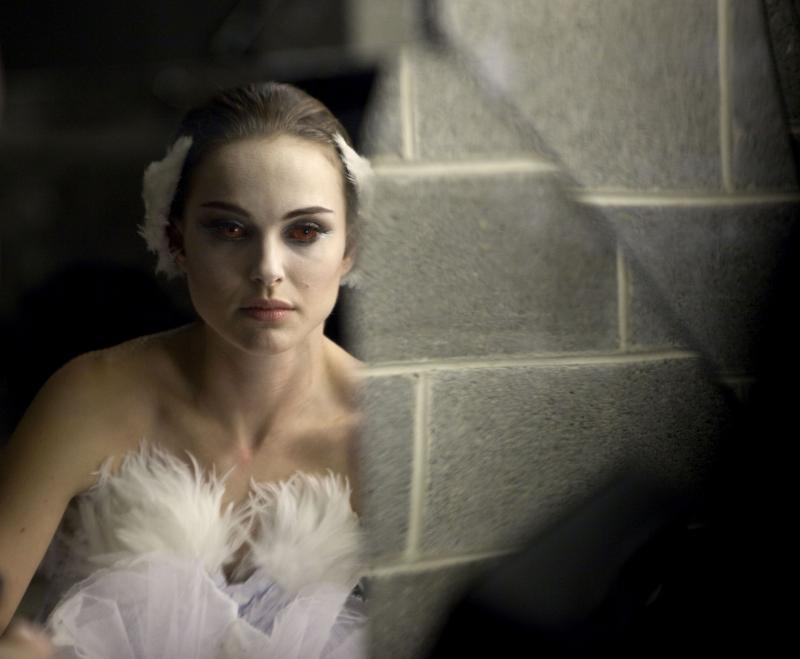
First up, “Black Swan.” I loved Natalie Portman’s performance in this film and truly believe she is the rightful winner of the Best Actress award this year. Also Darren Aronofsky actually managed to turn a film about ballet into a smash hit. Amazing! Portman’s turn as a perfectionist ballerina given her first lead role in “Swan Lake,” only to become paranoid about a new dancer in the company stealing it from her, is really the child-to-adult actress’s best film to date. She lost 20 pounds to play the part (something she is glad to be the complete opposite of now with her pregnancy).

Portman did have some ballet experience before this film, taking lessons from the ages of 4 to 13. But in preparation for “Black Swan,” she started training extensively for a whole year before production began, which not only involved ballet exercises but also swimming a mile a day. Aronofsky even admitted that for seven months of that year, Portman paid for the training out of her own pocket while the production was still trying to raise money for the film. When they did have enough money finally, it was so little that they couldn’t afford a medic, something that disturbed Portman after she twisted a rib during a lift (that took six weeks to heal). She offered up her own trailer in exchange for a medic from then on.

Another favorite performance I hope wins is Hailee Steinfeld. The 14-year-old star of “True Grit” really deserved a Best Actress nomination, but unfortunately, in Hollywood politics, the film’s marketing decided to submit her for Best Supporting Actress, as they knew she couldn’t beat out Portman. But Steinfeld truly is the leading star of “Grit.” Playing Mattie Ross, the young girl out for revenge on her father’s murderer, she holds her own with costars Jeff Bridges (who should be in the Best Supporting Actor category) and Matt Damon in her debut film.

Steinfeld won the role over 15,000 other young girls from ages 12-16. The Coen brothers wanted to make sure they kept that “simple, tough as nails young woman [whose] unusually steely nerves and straightforward manner are often surprising” characteristic that drew the brothers to the book in the first place. So first they looked all over Texas, and then expanded their search, finding Steinfeld here in LA.

My final big cheer fest for this year will be for “Toy Story 3.” Even though it would be awesome for it to win the Best Picture Oscar, it will definitely win for Best Animated Feature at least. And thank goodness, because I feel it is the pinnacle of Pixar’s talent. My favorite films of Pixar are still “Finding Nemo” and “Wall-e” but “Toy Story 3” is close on their heels. It’s the heart of the story, like the other two, that get me the most. Little Andy has grown up and now both he and his toys must move on. But will they be loved again or just thrown away? It’s a story that made even my dad sniffle and tear up at the end.

The film, which took two and a half years to write and storyboard, actually was more work for the studio than you might think. Because of all the advances in technology over the ten years since “Toy Story 2,” the animators couldn’t use the original base models for all the characters. So instead they had to recreate them all from scratch. Disney had been working on a third installment to “Toy Story” many years before Pixar though. During the two groups falling out from 2004-2005, Disney developed its own sequel without the Pixar crew. In this version, Buzz had a defect and was shipped to Taiwan for repair. But when the toys learn that the company is just tossing the old Buzzes and replacing them with new ones, they all ship themselves overseas to save Buzz. Luckily, when Pixar and Disney made up, they scrapped all ideas from that brief time and started over from scratch.

So, I hope this has revved you up for the big day on Sunday. Will all your favorites win? Will mine? Or will Hollywood just implode upon itself? (Hey, you never know…you never know.) Whatever the outcome, I hope you all have a fun time watching. See you next week with more great Hollywood history. Later, gators!

(Post-tidbit: “Toy Story 3” director Lee Unkrich's kids got to help their dad out with the film. His son Max wrote Daisy's name on Big Baby's pendent, as well as Bonnie's name on her backpack, and the others drew all the pictures in Bonnie's room.)

Tuesday, February 15, 2011

Hello, Mr. Burton: Becket & Anne of the Thousand Days

I have a lot of favorite actors (Paul Newman, Stewart Granger, Cary Grant, to name a few), and they all seem to have one common characteristic that drives them to me – their wonderful voices. I could listen to them talk all day long and never get tired of it. One very strong member of that amazingly-voiced-actors club is Richard Burton. So yummy...even if he was a drunk. So, today I thought I’d talk about two of my favorite films of his, the two films that brought him to my attention in the first place – “Becket” (1964) and “Anne of the Thousand Days” (1969).

Both of these films I first saw way back in grade school (way, way back). It’s actually funny how many classic films and actors I was introduced to, not through my own accord or a family or friend, but through the Texas public school system. And considering both these films may not be that historically accurate…yea to public education! But they are still so enjoyable to watch, even for my 10-year-old self, and shouldn’t be missed.

First up is “Becket” starring Burton and good friend Peter O’Toole (another great voice). It tells the story of the friendship, and then eventual betrayal, between King Henry II (O’Toole) and Thomas Becket (Burton). This film was actually how the two stars met, but they found a kindred spirit in each…or should I say spirits. They bonded mainly after work, drinking until dawn. The two did try to stay sober for the film, but it only lasted a week before finally they showed up to work plastered. They were filming the scene where Henry appoints Becket as England’s new Lord Chancellor. Luckily, there was little dialogue but O’Toole did have to put a ring on Burton’s finger, who described it as “like trying to thread a needle wearing boxing gloves.”

Burton was a little reluctant to accept the role of Becket at first, for he didn’t think it right to portray a Saint, or at least it wasn’t right that HE portrayed one. But luckily he changed his mind, and it resulted in one of the most intense and underplayed roles of his career. At the time, he had just married Elizabeth Taylor, and she was having a huge influence on him, both in his personal life and his career. He credits her with helping him truly transition between stage acting and screen acting, teaching him that on screen, less is more. She was also the one to get him to take the role of Becket, as well as play Hamlet again in 1964.

“Becket” is based on the play “Becket or the Honour of God” by Jean Anouilh. It appeared on Broadway with Laurence Olivier as Becket and Anthony Quinn as Henry II, and in London’s West End with Eric Porter and Christopher Plummer in the respective roles before it made the leap to the silver screen. O’Toole was originally cast to play Henry in the London production but had to break his contract to start rehearsals for “Lawrence of Arabia.” The film was also a critical darling, earning 10 Oscar nominations, including one for each of its two stars and Best Picture, but lost out to all but one – Best Adapted Screenplay.

“Anne of the Thousand Days” is also based on a play, this one by Maxwell Anderson from 1948. It tells the story of the romance between King Henry VIII and Anne Boleyn, his second wife. Burton had convinced Hal B. Wallis, the producer of “Becket” and many other period films, to purchase the rights to the play. While talking about it prior to filming, however, Elizabeth Taylor started to get excited as well. Finally, at lunch with the gentlemen, Taylor announced that she wanted to play Anne, she had to play Anne. At 37 years old though, she was too old to play the 18 year old heroine. Wallis didn’t know how to tell her this though, so Burton leaned over and said to her, “Sorry, luv. You're too long in the tooth."

Even though Burton did help Wallis with the idea for “Anne,” Burton was  reluctant to do this film. He had been doing period pieces for some many years now that he was getting tired of putting on the costumes and such. As he said, “The unfortunate thing is that everyone wants me to play a prince or a king ... I'm always wearing a nightdress or a short skirt or something odd. I don't want to do them, I don't like them, I hate getting made up for them, I hate my hair being curled in the mornings, I hate tights, I hate boots, I hate everything. I'd like to be in a lounge suit, I'd like to be a sort of Welsh Rex Harrison and do nothing except lounge against a bar with a gin and tonic in my hand.”

He disliked his performance in “Anne” and was extremely surprised that it garnered him another Academy Award nomination (his sixth). His performance is beautiful, though, one not to miss. Extremely powerful, of which Hollywood took note…but not enough. He lost out on the Oscar again, to John Wayne for the original “True Grit.” He would only get one more Oscar nomination in his life, for “Equus” in 1977, only to lose out again, this time to Richard Dreyfuss in “The Goodbye Girl.” He would share the Academy record for most nominations by an actor without a win with his “Becket” costar and drinking buddy O’Toole until 2007 when O’Toole surpassed him with a loss for “Venus.”

Whatever his credits, his lifestyle, his persona, no one can deny he was an amazingly power performer. He was the first of the new Hollywood fame that revels in the spotlight more than the art itself. He even said about himself once, “I rather like my reputation, actually, that of a spoiled genius from the Welsh gutter, a drunk, a womanizer; it's rather an attractive image.” He had the talent though, cherished words like no other, and almost sang ever word with his beautiful deep voice. So watch and listen to an amazing actor this week. “Becket” is an instant streamer on Netflix and “Anne of the Thousand Days” can be found on DVD. Have a wonderful rest of your week, everyone, and I’ll be back next week with more fun trivia.

(Post-tidbit: During “Becket,” Burton and Taylor were madly in love, but by the time “Anne” arrived, Burton’s eyes had started to wander. So when rumor got back to Taylor that Burton and Genevieve Bujold, aka Anne, were possibly getting along a little too well on set, Taylor decided to pay a visit to the set. When Bujold heard of this, she was furious and stated aloud “I'm going to give that bitch an acting lesson she'll never forget!"  She then proceeded to give the power final scene of the film between Anne and Henry.)

Tuesday, February 8, 2011

Hollywood Composition: Two Guys Named John

Sadly last week, we lost one of Hollywood's great film composers, John Barry.  He passed away at his home in New York from a heart attack at the age of 77.  And today happens to be another great Hollywood composer's birthday.  John Williams turns 79 today.  So what better time than today to talk about my love of these two great gentlemen's music?

Now, I'm pretty sure all of you know the name John Williams.  He is THE film composer, the king of all themes.  He created the music for all the Star Wars and Indiana Jones films, the first three Harry Potter films, the first two Jurassic Park films, "Superman," "Jaws," "Close Encounters of the Third Kind," "E.T."...need I go on?  There are just so many to name.  He even wrote the theme for the Olympics, that fanfare we hear constantly every two years!  He has been nominated 45 times for Academy Awards.  45!!  Tied with composer Alfred Newman, he is the second most nominated individual in Oscar history.  (Walt Disney is #1 with 59 nominations, 22 of those winners.)  Williams has only won five out of his 45 nominations, but he's also won four Golden Globes, seven BAFTAs, and 21 Grammys.  I got to see him conduct at the Hollywood Bowl once.  My brother gave me tickets for my birthday one year.  It was so amazing to hear many of his famous themes conducted by the man himself in those historic and iconic hills of Hollywood.


John Barry, on the other hand, you may not recognize the name as well, but I'm sure you know his music.  His list includes Oscar-winners "Dances with Wolves," "Out of Africa," "Born Free," "The Lion in Winter," as well as "Somewhere in Time," "Chaplin," and eleven James Bond films.  In fact, though he didn't receive screen credit for it, he created the famous Bond theme music...or at least arranged it.  "Dr. No" composer Monty Norman was having such a difficult time creating a satisfying theme for Bond that the producers turned to then-lesser-known Barry for help.  He came in and, using some of Norman's already-written elements, arranged the Bond theme we know so well today.  Norman received all the credit and residuals for the piece but many people have made it no secret that Barry came in to help.  Norman has won two class action lawsuits against others claiming that Barry was the actual composer.  Most likely he did just arrange it better, adding some jazz riffs and motifs here and there.  Yet, when producers had trouble with their next composer on "From Russia with Love," they remembered Barry and hired him full out as the film's composer, a relationship that lasted for ten more films.  The other famous Bond theme titled "007" is all Barry's.

The two Johns are both so iconic that it difficult to rank them on my favorites list.  John Williams is of course on a level all his own.  And Barry's scores are so beautiful that they just don't fit with my actual list.  (Yes, I have an actual favorite film composer list.  Geeks, here I am.)  My favorites of Williams' scores are, of course, all of the Star Wars music.  It is like a true symphony, story through music and themes.  My first ever trip to the Hollywood Bowl was to see the LA Philharmonic perform AFI's 25 Greatest Film Scores (a list only performed there that night).  "Star Wars" was voted the #1 film score of all time, and rightly so.  It was another beautiful night to hear them build to that last song performed.  (Williams also received #6 and #14 on the list, for "Jaws" and "E.T." respectively.)  As for Barry, he is my romantic composer.  If you wanted to make a film that was a love letter to anything, Barry was your man.  My favs are "Chaplin" (a letter to Chaplin and the original Hollywood era), "Dances with Wolves" (a letter to the Old West), and "Somewhere in Time" (a letter to...well, love itself).


These two men had very different starts, though jazz played a big part in both.  Barry grew up in England, spending his childhood at the eight cinemas his father owned.  Loving the action-adventure films the most because of the music, Barry learned to play the piano and trumpet in order to one day compose music himself.  When he was 25, he formed his own jazz band called The John Barry Seven, which brought him to the attention of the BBC show "Drumbeat."  On that, he met singer Adam Faith who hired Barry for his first film-composing job for Faith's first movie as well, "Beat Girl."  This led to three more films and a job at EMI record company arranging orchestral music for the company's artists.  These achievements are what caught the attention of the Bond producers and the rest is, as they say, Hollywood history.

Williams, though, grew up with music in his family.  Born in Queens, New York, his love of music came from his father, a jazz drummer.  He moved to North Hollywood with his family when he was 16 and attended UCLA for awhile after high school.  He was drafted by the Air Force, however, when he was 20 and spent the next three years arranging and conducting music for the Air Force Band.  After his service, he moved back to New York and attended the famous Juilliard School, working as a jazz pianist on the side, earning the name "Little Johnny Love."  After Juilliard, he moved back to LA and worked as a studio pianist, getting to work with composer greats like Henry Mancini and Alfred Newman.  That's actually him playing the opening riff to Mancini's famous "Peter Gunn Theme."  His first film-composing job was for the B-movie "Daddy-O" in 1958, and his career just grew from there, with films and television alike.  (Some of his TV themes include "Lost in Space" and the pilot episode of "Gilligan's Island.")

So, get your music fix and listen to some greats this week, to honor both a man on his birthday and a man at his death.  May your lives all be beautifully scored this week, just like in the movies.  :)  See you Friday!

(Post-tidbit:  Williams has scored every one of Steven Spielberg's directorial films since they started working together in 1974 with "The Sugarland Express"...except two - "The Color Purple" and "Twilight Zone: The Movie," in which Spielberg only directed a section of the film.)